

The 'While You're Here' List: Small Jobs That Are Worth Grouping Together
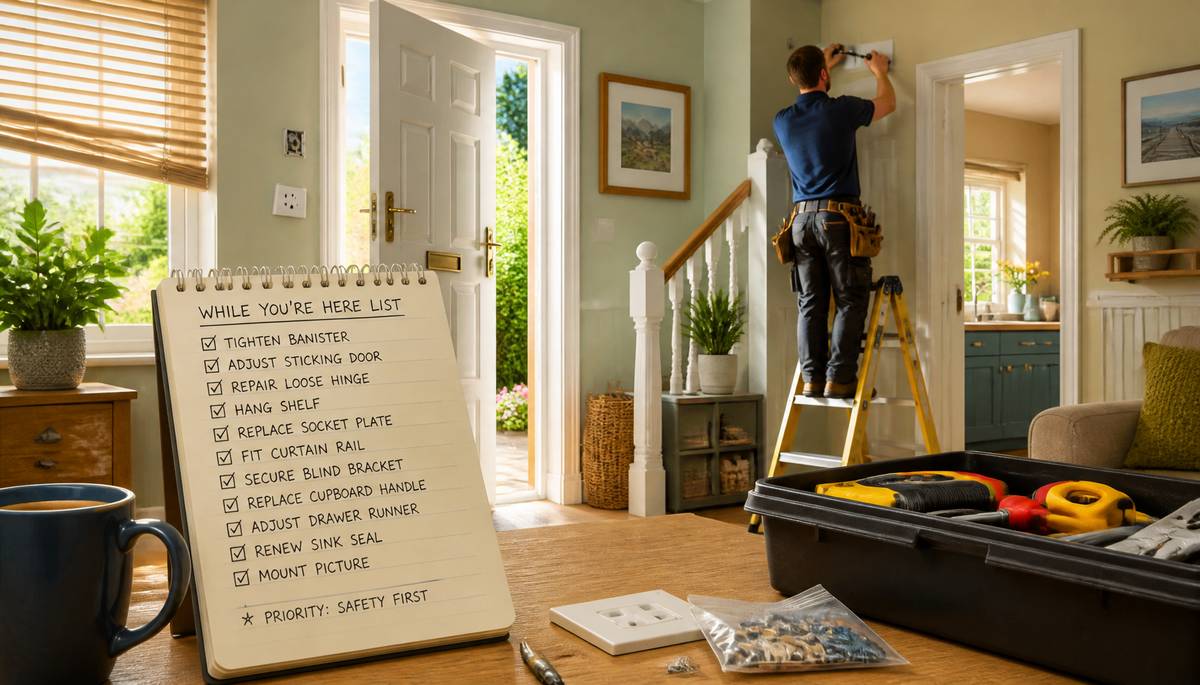 A house can collect minor faults with the quiet efficiency of a museum acquiring exhibits. The door needs a shoulder nudge to close. One blind hangs at an angle that suggests it has received disappointing news. A socket cover is loose, but not loose enough to create urgency, which is precisely why it has been loose since last summer.
These are the jobs that become part of the scenery. People step around them, compensate for them and develop tiny domestic rituals: lifting a cupboard door before shutting it, avoiding one light switch, or promising themselves they will hang the picture frame "when there is a proper moment." A handyman visit can be an excellent chance to clear these small irritations, provided the list is sensible.
Start With Jobs That Share Tools or Skills
The best "while you're here" list has a clear internal logic. Group together tasks that involve similar materials, equipment or practical knowledge. Several small carpentry jobs, for example, may fit neatly into one visit: tightening a wobbly banister, adjusting a sticking internal door, repairing a loose cabinet hinge and hanging a shelf.Likewise, a cluster of light fixture or fitting tasks may make sense for someone qualified to handle them. Replacing a damaged switch plate, fitting a new curtain rail and securing a loose blind bracket can often be assessed together. Mention every task beforehand, especially where electrical work is involved. A tradesperson should know what they are arriving to do, rather than discovering a minor expedition halfway through the morning.
Look for Jobs in the Same Area
Location matters as much as category. A short list of tasks in one room is usually more efficient than four unrelated jobs scattered across a house like clues in a low-budget detective programme. If the kitchen needs a cupboard handle replaced, a drawer runner adjusted and a seal renewed around the sink, grouping them makes practical sense.The same applies upstairs. A stiff bedroom door, a loose wardrobe knob and a picture to be mounted in the hallway may be handled quickly when ladders, fixings and tools are already nearby. It also gives the homeowner a chance to discuss the condition of a particular area rather than repeatedly explaining where everything is.
Separate Repairs From Possible Projects
A "while you're here" list should contain defined, achievable tasks. It should not quietly expand into "Could you also redesign the utility room?" There is a real difference between securing a loose skirting board and planning built-in storage for an entire wall.If a job may require measurements, materials, design choices or a separate quotation, list it as something to inspect rather than something expected to be completed immediately. That keeps the visit realistic and prevents a useful repair appointment from becoming an awkward negotiation beside a half-empty coffee mug.
Give Each Item a Simple Description
A clear list saves time. Write down what is wrong, where it is and what outcome you want. "Bedroom blind bracket has come loose; needs securing" is much more useful than "blind issue upstairs." Photographs can help, particularly for fittings, damaged surfaces or awkward access points.If you have already bought replacement handles, hinges, shelves or curtain poles, say so in advance. Check that the items are complete and that all the screws, brackets and mysterious little metal pieces are still in the packet. Many home-improvement projects are delayed by one missing part no larger than a fingernail.
Be honest about anything that could affect the work. A very heavy mirror, a high ceiling, a wall that may contain pipes or cables, restricted parking, or a room currently occupied by an enthusiastic dog are all worth mentioning. The more accurate the information, the more likely the visit will run smoothly.
Keep the List Short Enough to Finish Well
There is a temptation to produce a handwritten document that unfolds across the dining table like a treaty. Resist it. A sensible list might contain three to six small jobs, depending on their complexity and the time booked. Ask the tradesperson which tasks should take priority if time becomes tight.Put safety and damage prevention at the top. A loose socket cover, unstable handrail, water leak or unsecured wall fixture deserves attention before cosmetic annoyances. After that, choose the things that cause repeated daily irritation. Fixing a door that sticks every morning may improve life more than finally mounting an ornamental hook nobody has noticed since 2019.
It is also reasonable to leave some jobs for another visit. A good list is not a test of whether every unresolved household thought can be converted into labour before lunch. It is a way of using someone's time efficiently while giving the work proper attention.
List but Not Least
Small repairs have a curious effect on a home. Individually, they may seem trivial; together, they make rooms feel easier to use and less faintly accusatory. The picture finally reaches the wall, the blind behaves itself, the door closes without a wrestling match, and the household stops making excuses for its own furniture.Keep a running note of minor jobs as they arise, then review it before arranging a visit. Group related work, describe it clearly and prioritise what matters most. That approach turns "while you're here" from an apologetic afterthought into a practical plan—and gives the tradesperson a fair chance of leaving with the list finished rather than merely introduced.
Article kindly provided by glasgow-handymansolutions.co.uk
Latest Articles
- Before You Hire a Handyman, Photograph the Problem Properly
- The Repair That Reveals Three More Repairs: How to Handle Scope Creep Calmly
- The 'While You're Here' List: Small Jobs That Are Worth Grouping Together
- The Previous Owner's Strange Decisions and How a Handyman Unpicks Them
- The Guest Test for Small Home Repairs
- Why a Door That Still Locks Can Still Be a Security Problem
- The One-Hour Home Audit: Small Defects That Quietly Become Expensive Repairs
- Can a House Be Too Well Insulated? Understanding the Other Half of Low-Energy Design
- Your Roof Needs to Breathe Too: The Link Between Ventilation, Condensation and Hidden Timber Damage
- Why Your Boiler Behaves Perfectly Until the Weather Turns Cold
- Why Roof Age Is Only Part of the Picture
- How HOA Boards Can Catch Pavement Problems Before They Get Expensive
- Why Vacuuming Alone Eventually Stops Making a Carpet Look Clean
- Designing a Garden That Still Works After the Sun Goes Down
- Why Your Boiler Sounds Different in Summer Than It Does in Winter
- Case Study: Patio Installation Costs in Newcastle
- Why Your Garden Could Be the Most Underrated Fitness Space You Own
- The Hidden Costs of Ignoring Tree Stumps After Felling
- How Much Does a New Roof Cost in Portsmouth? 2026 Pricing Guide
- Choosing the Right Hot Water System for the Way You Actually Live
- Interior Design
- Home Improvement
- Gardening
- Home Organization
- Home Maintenance
- DIY Crafts
- Kitchen and Dining
- Bathroom Design
- Home Security
- Home Automation
- Green Living
- Home Office
- Home Decor
- Garden Design
- Pet Care
- Home Technology
- Landscaping
- Home Energy Efficiency
- Home Cleaning
- Home Safety
- Home Exterior
- Home Insulation
- Home Buying
- Home Selling
- Renting
- Tradespeople
- Garage
- Bedroom
- Painting and Decorating
- Plumbing and Drainage